Solar Products in Pakistan: Pick by Household Size
The range of solar products in Pakistan is wide, and most buyers start in the wrong place: with a product instead of a need. A better approach is to begin with your household, count the appliances you run, and then choose the kit that fits.
This guide uses three typical household profiles to show what each kind of system includes, what it costs you in trade-offs, and where people often over-spend.
Start with Your Load, Not the Catalogue
Pull out the last six electricity bills. Note the peak summer month, because that is when your demand is highest. Divide the units by 30 to get daily consumption. That one number guides everything else.
Then list essential appliances: fans, lights, refrigerator, water pump, TV, and air conditioners. Add up their running watts and note which ones start with a surge, like pumps and AC compressors.
Profile A: The Small Flat (about 3kW)
Think of a two-bedroom flat in Rawalpindi with fans, LED lights, a refrigerator, a TV and one inverter AC used in the evening.
- 6 to 7 panels in the 450-550W range.
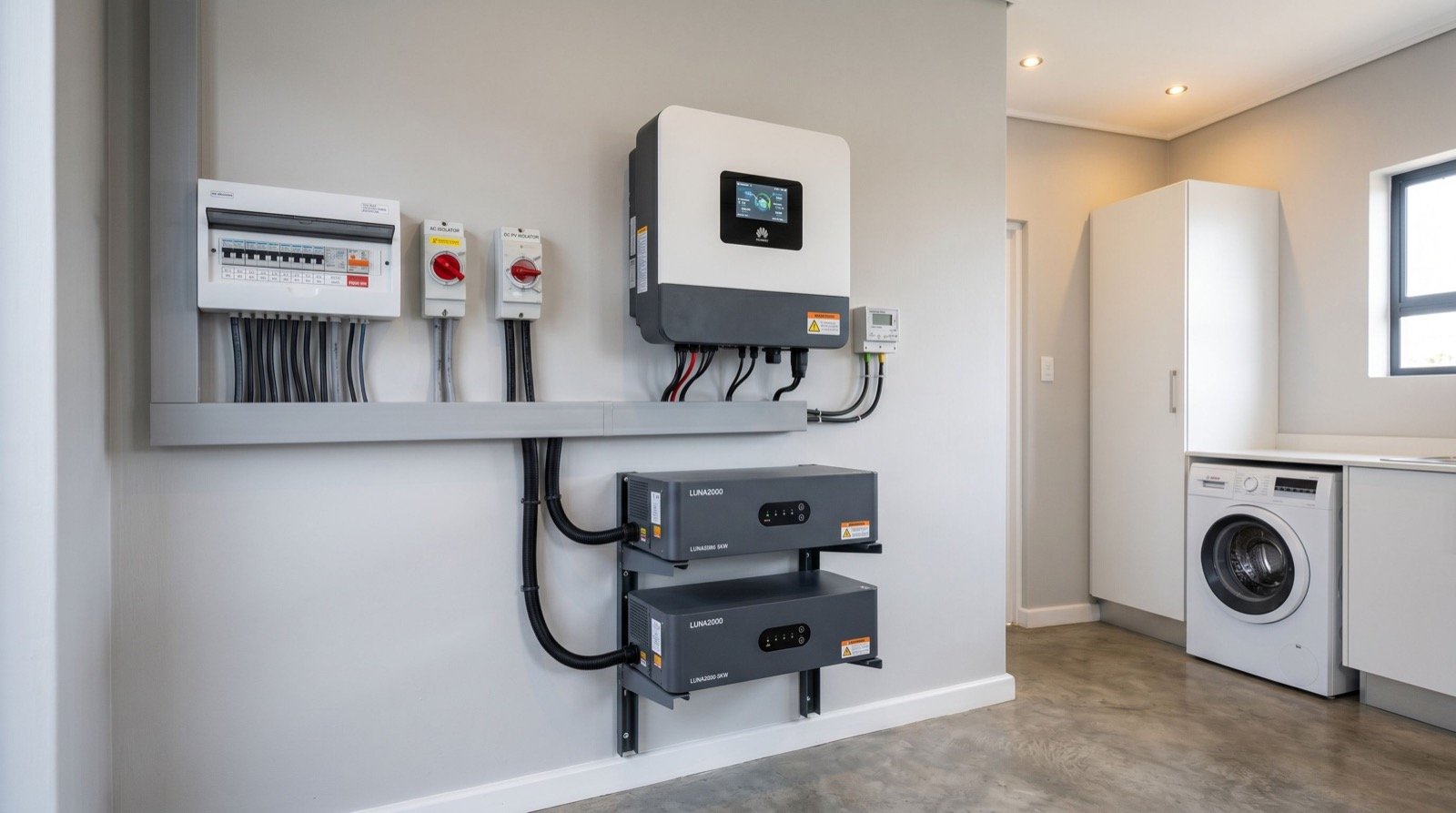
- A 3kW hybrid inverter.
- One small lithium battery for night-time fans and lights.
The trap here is the second AC. A single added compressor can double your needs, so decide before buying.
Profile B: The Family Home (about 5kW)
This is a three-bedroom house in Lahore or Faisalabad with two inverter ACs, a washing machine and a water motor. Daily use sits around 20 to 30 units in summer.
- 9 to 11 panels depending on wattage.
- A 5kW hybrid inverter with MPPT inputs.
- A mid-size lithium battery to cover evening cooling.
Many families in this range choose to run ACs mostly on daytime sun, and use the battery only for essentials. That keeps the battery small and the budget sane.
Profile C: The Shop or Small Workshop (about 10kW)
Shops usually work in daylight hours, which is perfect for solar. A tailoring unit or cold-storage counter can run heavy loads straight off the array with little or no battery.
- 18 to 22 panels in a well-planned layout.
- A 10kW on-grid or hybrid inverter.
- Optional battery only for critical equipment.
Side-by-Side Comparison
| Profile | System size | Typical panel count | Battery need | Main appliances |
|---|---|---|---|---|
| Small flat | 3kW | 6-7 | Small | Fans, lights, one AC |
| Family home | 5kW | 9-11 | Medium | Two ACs, pump, fridge |
| Shop or workshop | 10kW | 18-22 | Minimal | Machines, cooling, lighting |
These figures are indicative. A proper design considers roof area, shading and local tariff structure.
Which Solar Products Do You Actually Need?
A complete system has five parts. Missing or under-sized any of them hurts the rest.
- Panels, the energy source. Compare options for solar panels in Pakistan by watt rating, warranty and temperature behaviour.
- Inverter, which converts DC to AC and manages grid or battery flow.
- Battery, optional but vital for outages.
- Mounting structure, strong enough for wind and corrosion.
- Protection and cabling: breakers, surge arrestors, earthing and proper cable gauge.
Is Net Metering Worth It?
If you export surplus units, net metering can reduce your bill. Rules and buyback rates are published by NEPRA, and they change, so check the latest notification before sizing for export. Compare the export value against the simple approach of using more power yourself during the day.
A Practical Rule of Thumb
Self-consumption beats export when buyback rates are lower than the retail rate you pay. Shift washing, pumping and ironing to the sunniest hours and you gain value without any extra hardware.
Common Buying Mistakes
- Choosing an inverter that is too small for the future load.
- Ignoring shade from water tanks and neighbouring buildings.
- Buying batteries before confirming how long your outages last.
- Skipping the installer’s written warranty.
Real-World Sizing Walkthrough
Let us walk through a practical example. A family in Gujranwala pays for 900 units in July. Divide by 30 and you get 30 units per day. Using four effective sun hours as a conservative planning figure, the array needs to produce roughly 7.5kW to cover the entire bill on a clear day.
Few families need that much. Many choose a 5kW array and accept that it covers about two thirds of summer use, because the roof is limited and the payback beyond that point slows. The decision is financial as much as technical.
Quick Sizing Formula
- Find the daily average units for your peak month.
- Divide by 4 to estimate the minimum array in kW.
- Add 10 to 15 percent for wiring and dust losses.
- Check that the roof has enough clear area, roughly 5 to 6 square metres per kW.
Choosing the Right Inverter Type
The inverter is the brain of the system. Three types exist, and the right one depends on your outage pattern and future plans.
| Inverter type | Works in outage? | Battery support | Best for |
|---|---|---|---|
| On-grid | No | None | Offices and shops with daytime load |
| Hybrid | Yes | Built in | Homes with regular outages |
| Off-grid | Yes | Required | Farms and remote locations |
Where Rooftop Space Gets Wasted
Roofs in dense cities such as Karachi and Lahore are full of tanks, stairwell covers and satellite dishes. Shade from a single water tank at 3 pm can cut the output of an entire string if panels are wired in series. Ask for a layout drawing that shows shade paths across the day.
Where shade is unavoidable, microinverters or power optimisers can limit the loss. They cost more per panel, so use them only on the affected section.
Budgeting in Stages
You do not have to buy everything at once. Many households install panels and a hybrid inverter first, then add a battery after a few months once they understand their night-time demand. This staged approach spreads the cost and avoids buying more storage than you really use. Just confirm early that the inverter can accept extra batteries or panels later.
Frequently Asked Questions
What size solar system do I need for my house?
Divide your peak monthly units by 30 for daily use, then divide by roughly 4 sun hours. That gives the minimum array size in kW.
Do solar products need much maintenance?
Very little. Clean panels regularly and have an electrician check connections once a year.
Can I expand my system later?
Yes, if the inverter has spare capacity. Mention your plans so the designer leaves headroom.
Are hybrid inverters better than on-grid ones?
Hybrid models handle batteries and grid together. On-grid is cheaper but shuts down during outages.
Conclusion
Choosing the right solar products in Pakistan is easy once you know your load. Start with your bills, match one of the profiles above, and hire quality service providers to confirm the design. Plan for growth, document the warranty, and your system will pay for itself for years.